
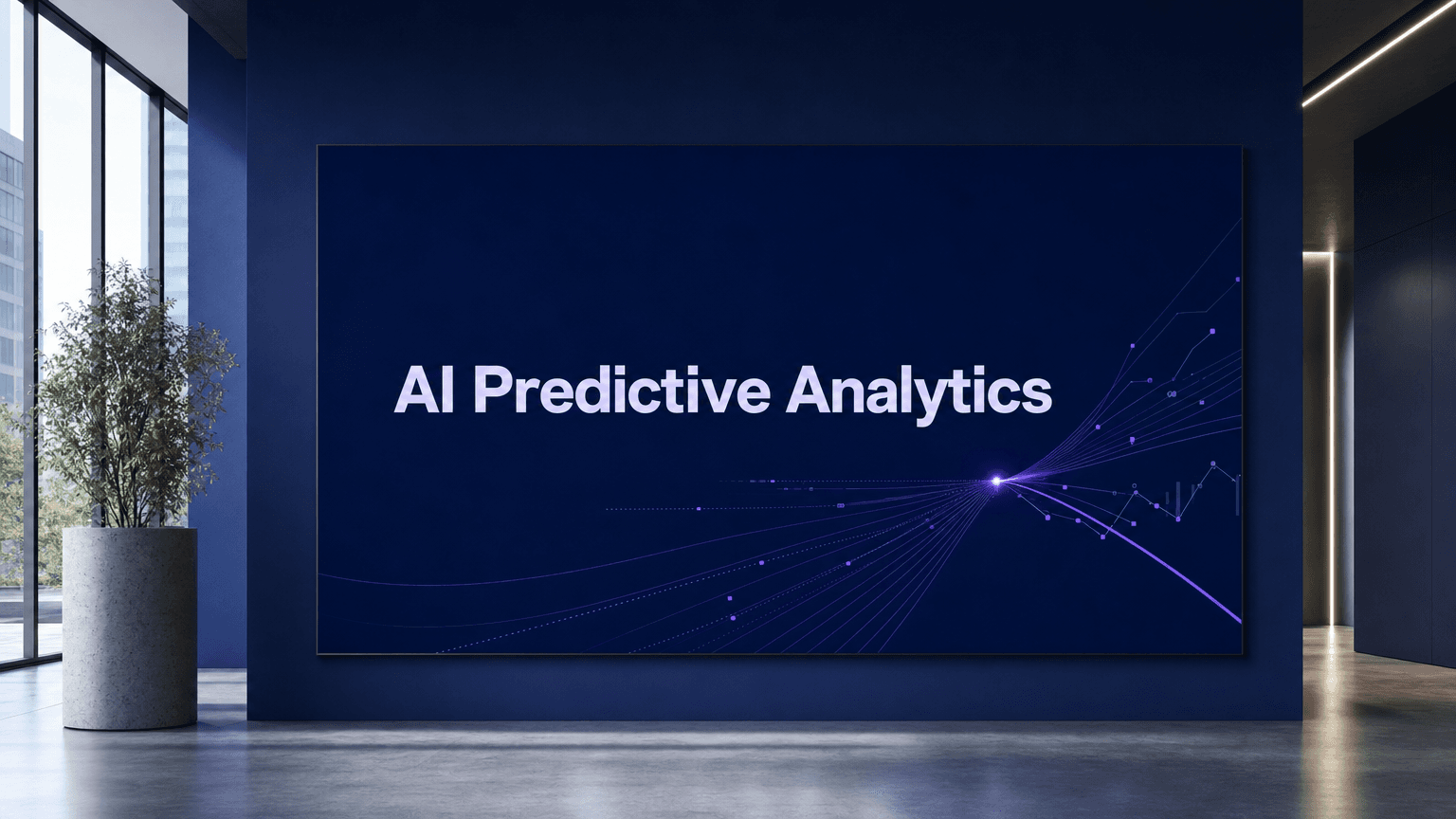

According to Gartner (2025), 74% of B2B marketers who use AI-powered predictive analytics report a significant increase in campaign ROI. AI-powered predictive analytics is the use of artificial intelligence technologies to analyze historical data and predict future marketing outcomes, enabling smarter decision-making and optimized campaign performance.
What is AI-powered predictive analytics in B2B marketing?
AI-powered predictive analytics leverages machine learning algorithms and big data to forecast customer behaviors, sales trends, and campaign results. It helps marketers anticipate buyer intent and optimize strategies accordingly.
Key components of AI predictive analytics:
- Data collection from CRM, CMS, and marketing automation platforms
- Machine learning models that identify patterns and trends
- Real-time data processing for dynamic insights
- Predictive scoring to prioritize leads and accounts
Predictive analytics transforms gut-feeling decisions into data-driven strategies.
How does AI predictive analytics improve B2B marketing ROI?
By accurately forecasting which prospects are most likely to convert, AI predictive analytics enables targeted campaigns that reduce wasted spend and increase engagement.
Benefits include:
- Enhanced lead scoring and prioritization
- Personalized content and messaging based on predicted needs
- Optimized budget allocation across channels
- Faster sales cycles through better alignment with buyer intent
According to Forrester (2026), companies using AI-driven predictive analytics see a 30% reduction in customer acquisition costs.
Better predictions mean better marketing outcomes — and more efficient use of resources.
What tools and frameworks support AI predictive analytics in B2B?
Several platforms and methodologies enable marketers to implement predictive analytics effectively.
Notable tools and frameworks:
- Salesforce Einstein: AI-powered CRM insights
- HubSpot Predictive Lead Scoring: prioritizes high-value leads
- Microsoft Azure Machine Learning: custom predictive models
- OKR frameworks to align analytics goals with business objectives
- Scrum methodologies for agile data science projects
Integrating these tools with existing marketing stacks ensures seamless data flow and actionable insights.
What challenges do B2B marketers face when adopting AI predictive analytics?
Despite its benefits, adoption is not without hurdles.
Common challenges:
- Data quality and integration issues
- Lack of skilled personnel to interpret analytics
- Resistance to change within marketing teams
- Ensuring GDPR compliance when handling customer data
According to McKinsey (2024), 45% of B2B firms cite data silos as a major barrier to AI adoption.
Overcoming these challenges unlocks the full potential of AI in marketing.
Frequently asked questions
What types of data are used in AI predictive analytics?
AI predictive analytics uses historical sales data, website interactions, CRM records, social media engagement, and third-party market data to build accurate predictive models.
How can predictive analytics improve lead generation?
By scoring leads based on predicted likelihood to convert, marketers can focus efforts on high-value prospects, increasing lead quality and conversion rates.
Is AI predictive analytics suitable for small B2B companies?
Yes, many scalable AI tools cater to small and medium businesses, enabling them to benefit from data-driven insights without large investments.
How does GDPR affect the use of predictive analytics?
Marketers must ensure data is collected and processed with explicit consent and maintain transparency to comply with GDPR regulations.
What is the difference between predictive and prescriptive analytics?
Predictive analytics forecasts future outcomes, while prescriptive analytics recommends actions based on those predictions to optimize results.
Unlock smarter B2B marketing with AI predictive analytics
AI-powered predictive analytics is no longer a futuristic concept but a practical tool driving measurable improvements in B2B marketing. By leveraging data insights, marketers can enhance targeting, personalize messaging, and allocate budgets more efficiently.
Witflow helps B2B companies integrate AI predictive analytics seamlessly into their marketing strategies. Explore how our Demand Lab, WitFlow can empower your team with predictive insights. Combine this with our AI-native CMS, WitFlow for dynamic content delivery and AEO websites, WitFlow to boost search visibility.
Embrace AI predictive analytics today to stay ahead of market shifts and maximize your marketing ROI with Witflow's expert solutions.